PT
Numa procura de (re)construção da narrativa colonial, proponho uma disseminação ética do arquivo colonial pela construção de um discurso que extrapole a história dominadora da ideologia colonialista, procurando dar uma forma de poder, pela minha interpretação artística e simbólica, a quem foi colonizado.
Sob esta ideia, este trabalho partiu da coleção fotográfica da Missão Antropológica e Etnológica da Guiné – 1946/47 (Universidade de Lisboa/Museu Nacional de História Natural e da Ciência – IICT), concebida com o intuito de servir os propósitos de investigação coloniais do ministério das Colónias – Junta das Missões Geográficas e Investigações Coloniais, e liderada por Amílcar de Magalhães Mateus, assistente da Faculdade de Ciências do Porto e zoólogo dedicado à antropologia física.
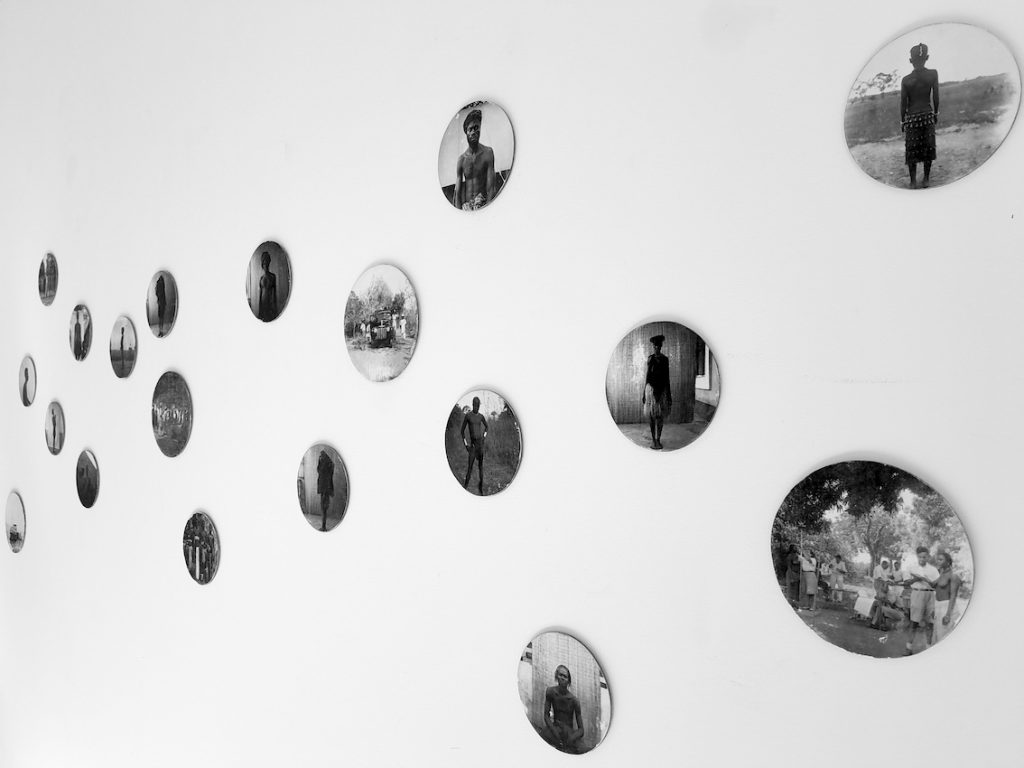
Nesta coleção estão incorporadas várias categorias, sendo alvo de interpretação e recodificação visual as fotografias da categoria Tipo, ou seja, retratos de habitantes de várias comunidades da Guiné-Bissau. Estes retratos eram captados com o objetivo único de recolher documentação objetiva sobre a caracterização física das pessoas, complementada pela mediação e descrição minuciosa das partes do corpo de cada pessoa, tendo em vista usá-las como força de trabalho em diferentes formas de produção e exploração da terra guineense, para proveito único da economia portuguesa. As pessoas eram fotografadas de forma obrigatória e sem consentimento. Esta documentação revela-se como uma prova da exploração colonial e do uso forçado e objetificado da população guineense.
O guineense engenheiro agrónomo José Filipe, afirma que é desejável a “reconciliação pela verdade na escuta da sua multiplicidade de fontes” (Kowalski, 2024).
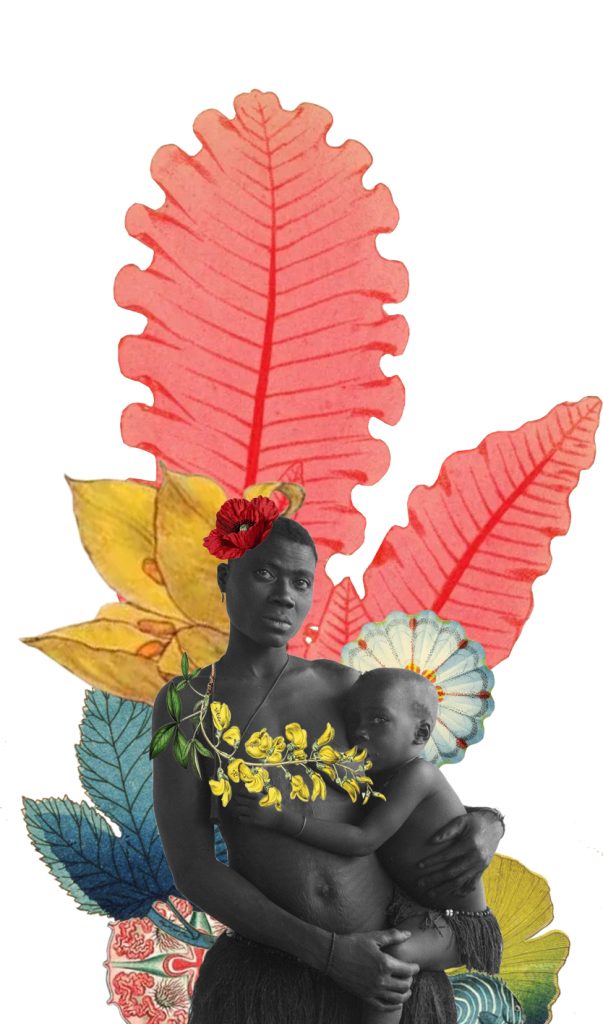
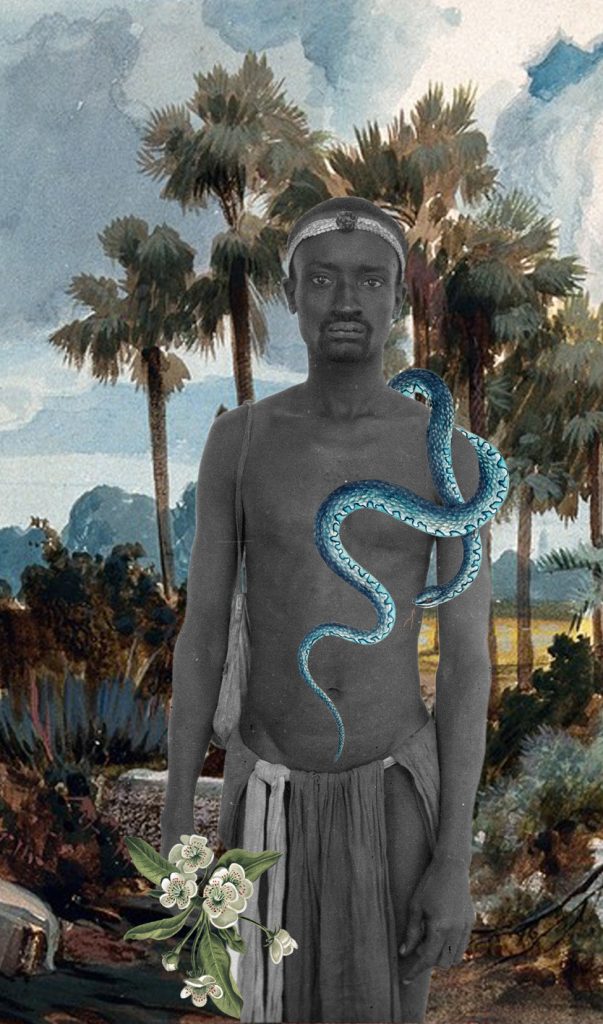
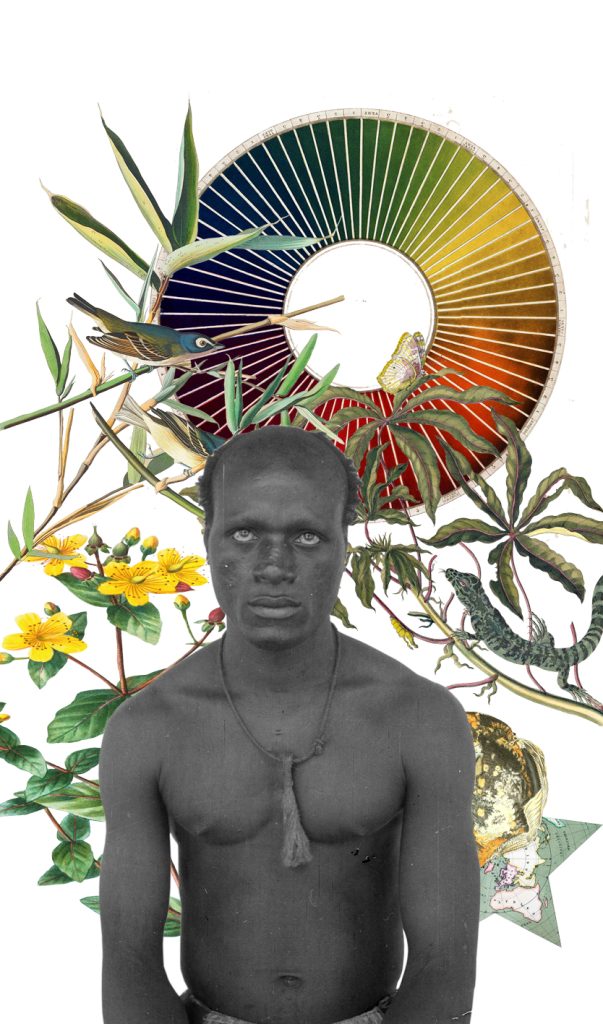
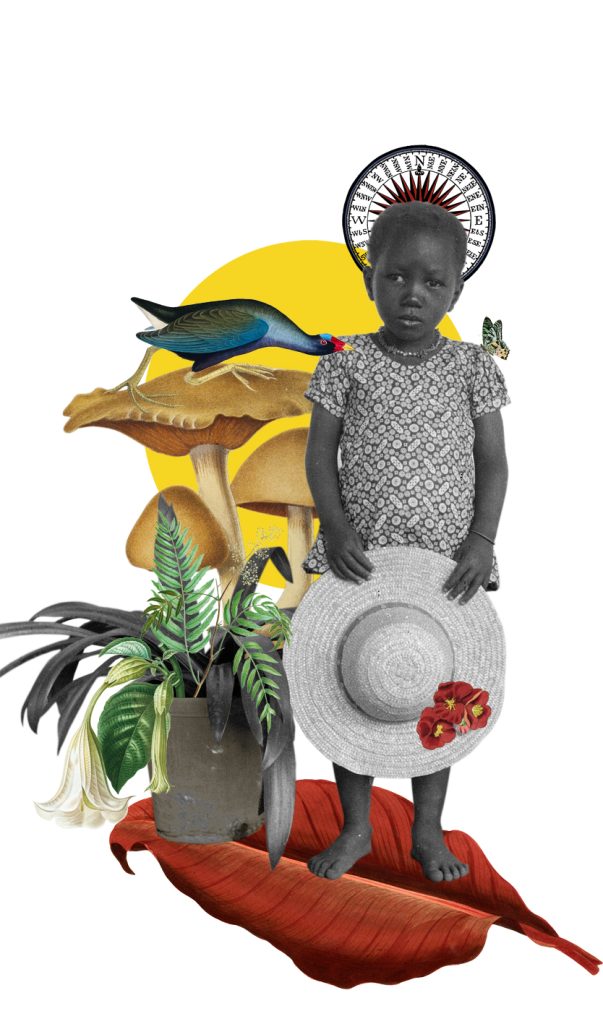
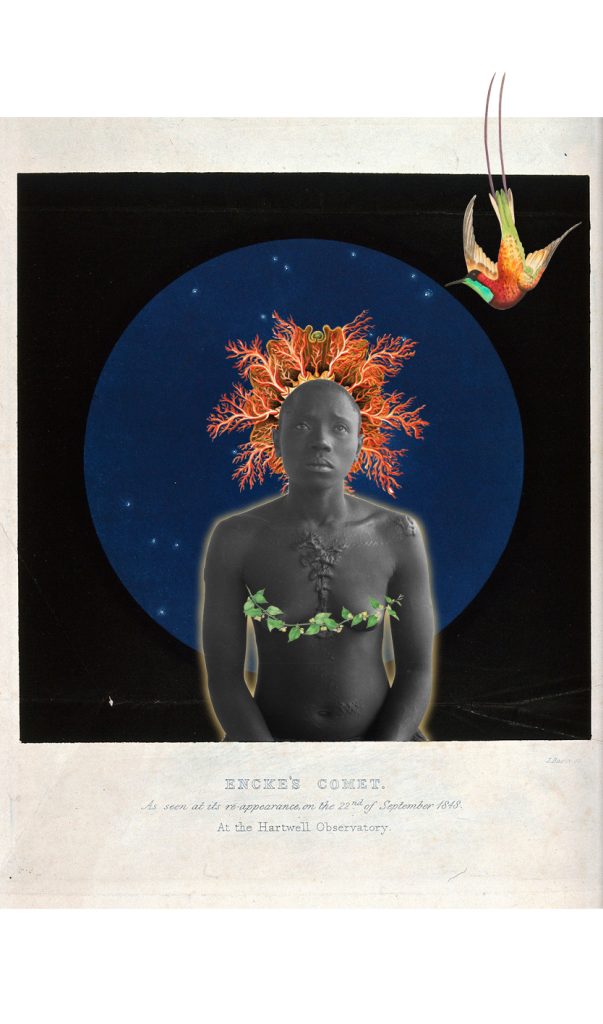
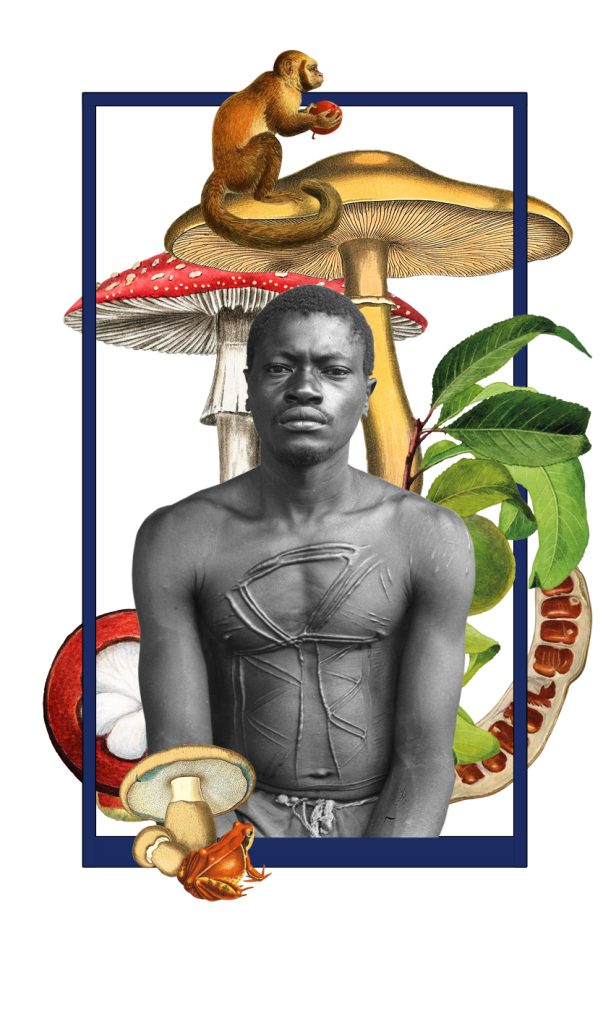
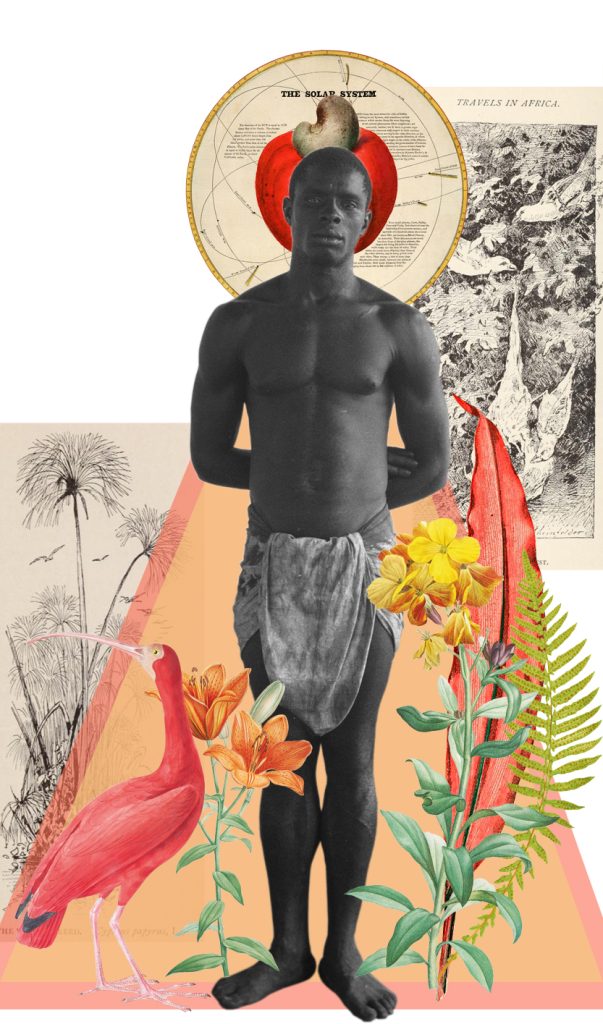
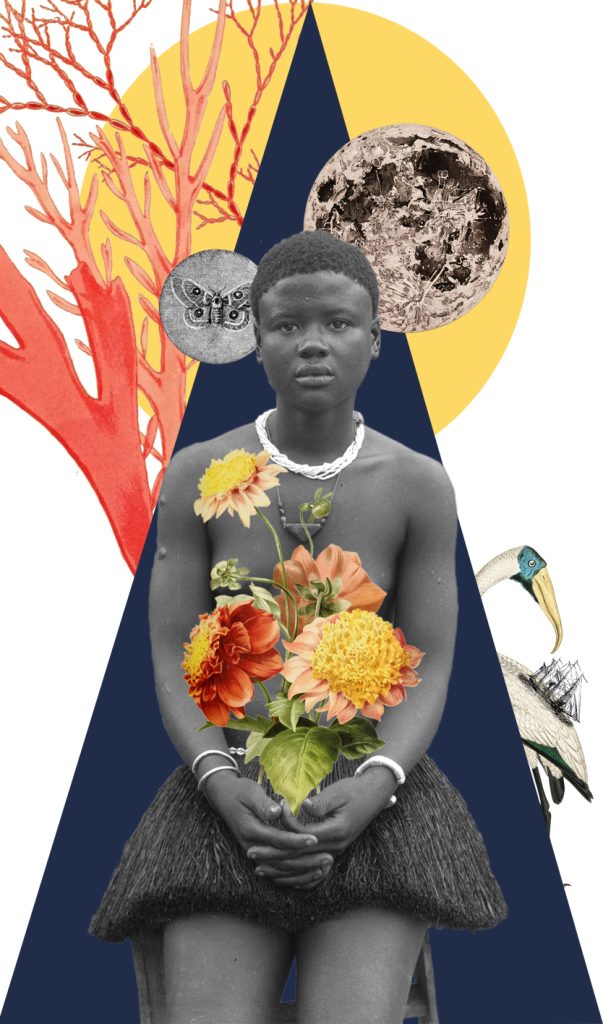
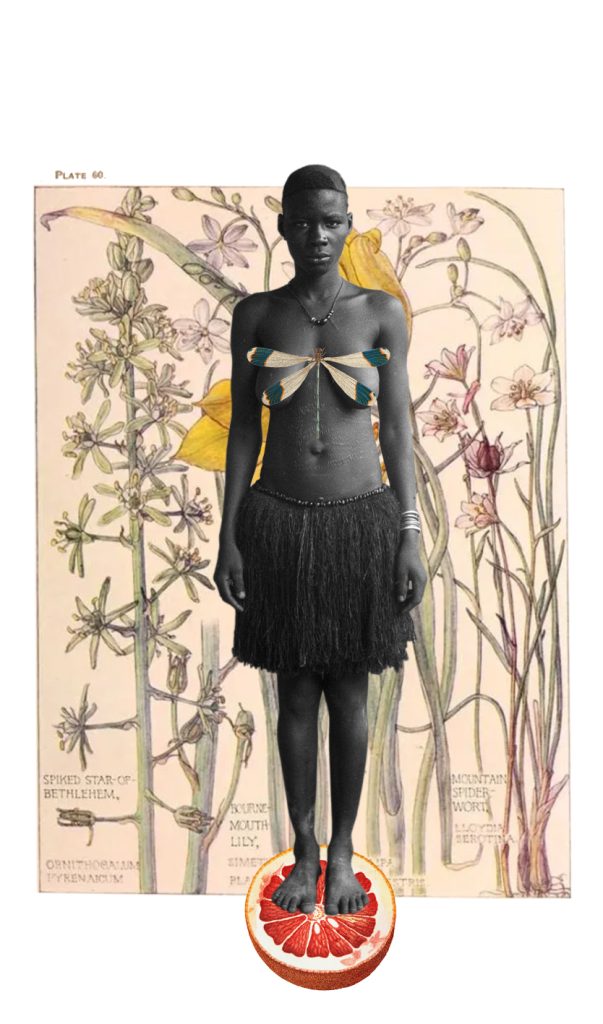
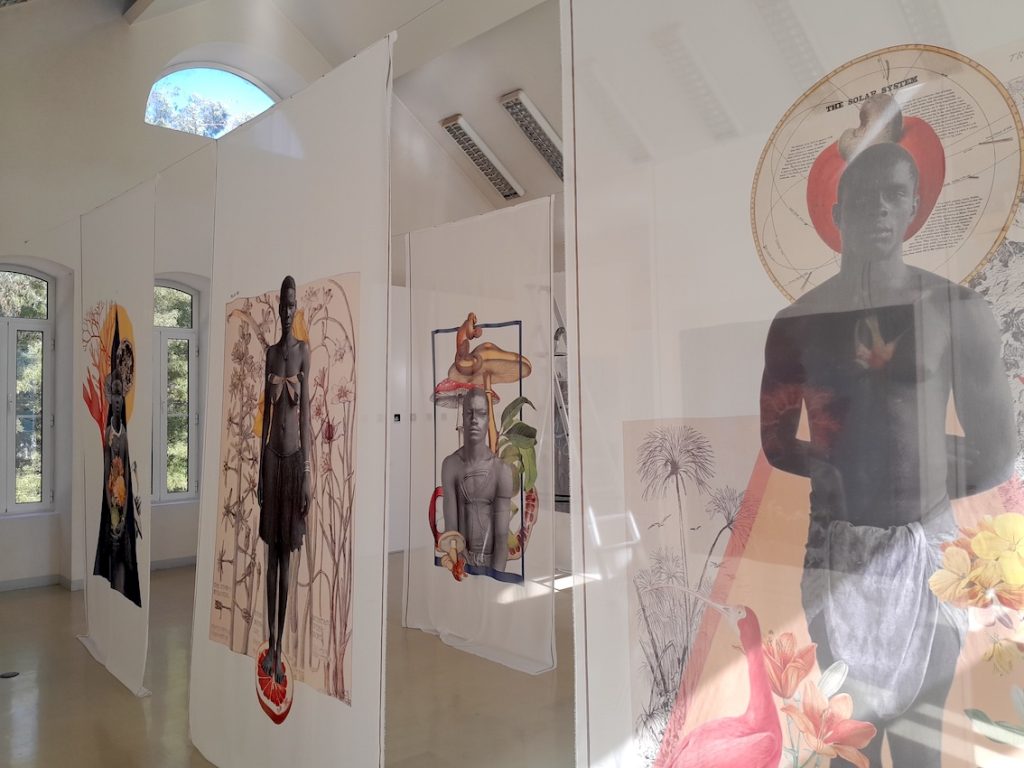
Após o meu trabalho de investigação que se desenvolveu sob esta premissa, resultando na tese de doutoramento “Apropriação participativa de memórias fotográficas coloniais: o arquivo e a construção de narrativas na Guiné-Bissau” (2024), e como possível abordagem para este processo de reconciliação, pretendo, através do objeto fotográfico, de forma alegórica e sob o meu olhar criativo, dar uma nova vida às pessoas fotografadas, trazendo cor a estas fotografias a preto e branco, através da sua manipulação e integração de novos elementos visuais. Procuro, assim, criar uma narrativa de visão e interpretação pessoal, subjetiva, que permita transparecer personalidades imaginada e livres das pessoas então fotografadas.
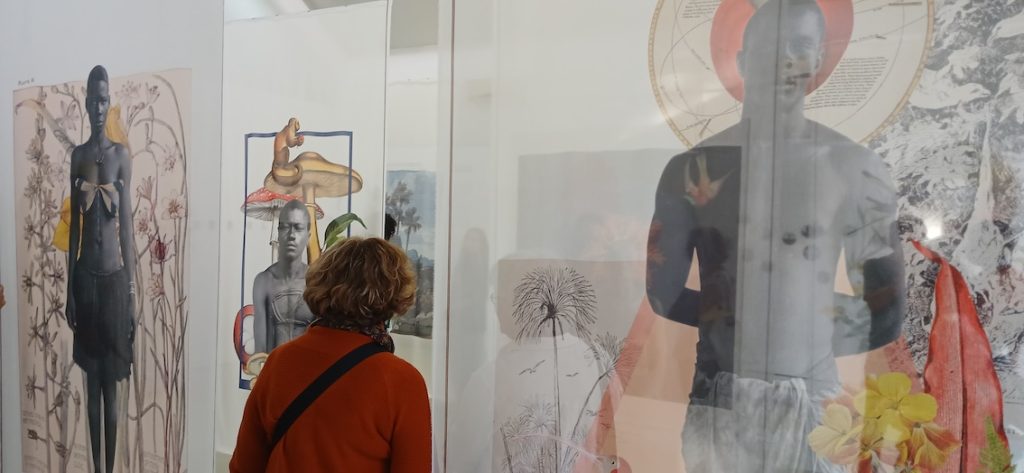
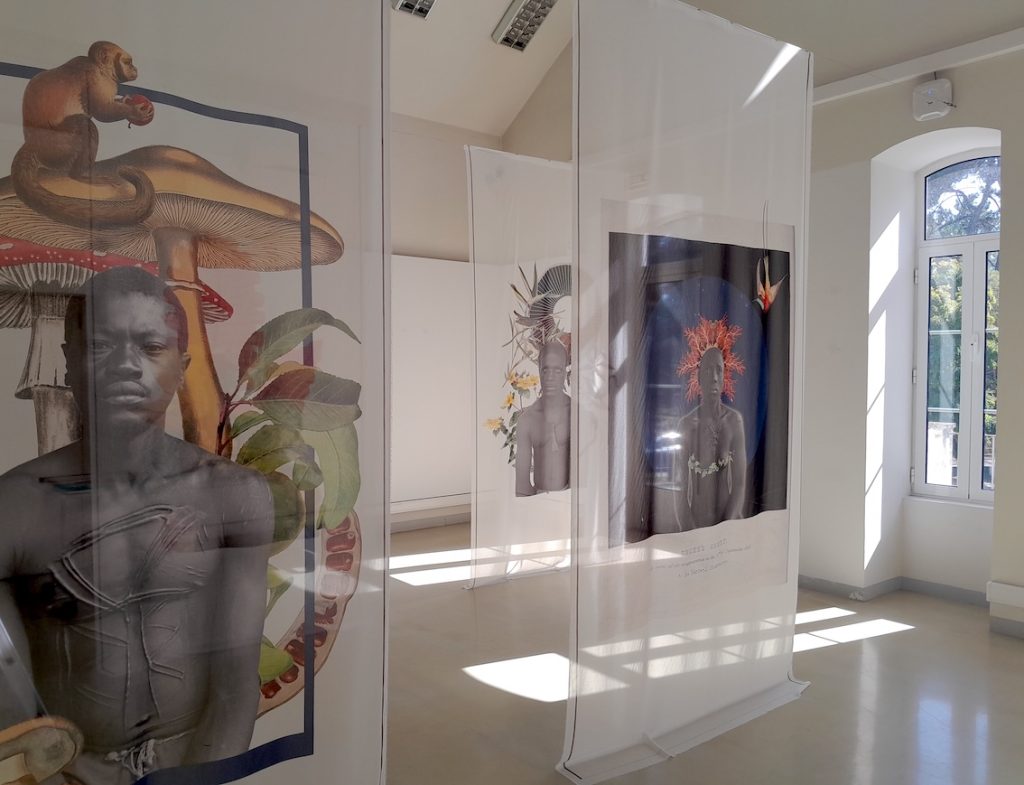
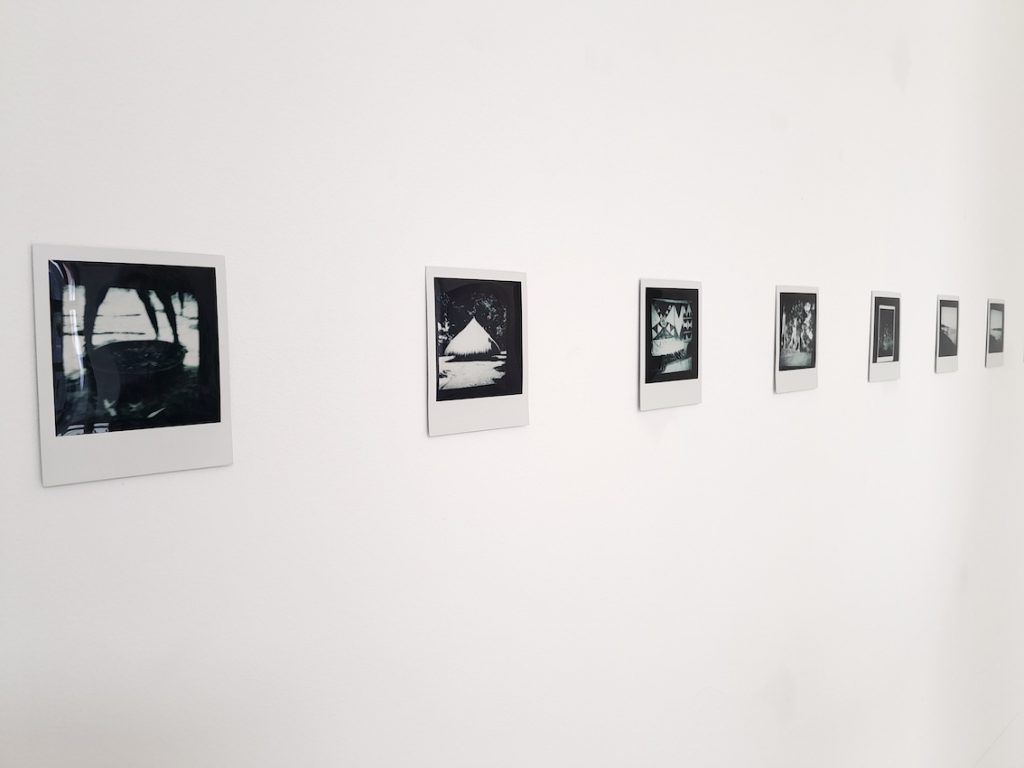
E ainda numa homenagem à imagem analógica, e com referência a técnicas fotográficas do séc. XX e às viagens de exploração e de expedições científicas datadas do final do século XIX e século XX, ilustrações e imagens do arquivo fotográfico são conjugadas, e diferentes formas de impressão artesanal e digital são executadas, para a criação de uma terceira imagem, que passará a representar um imaginário que procura dignificar a pessoa retratada. Cada imagem coloca num mesmo nível objeto/sujeito de estudo e explorador, antropólogo e cientista, fotografado e o seu retrato fotográfico, procurando, assim, representar o dissolver de relações de dominação.
As ilustrações que aqui aparecem provêm de estudos científicos de história natural, efetuados nos mais variados cantos do mundo, publicados em livros como o ‘Dictionnaire Universel D’histoire Naturelle, Birds of America’, ‘Nouveau Larousse illustré, Poissons, écrevisses et crabes… que l’on trouve autour des Isles Moluques, et sur les côtes des Terres Australes’, ‘The Great Barrier Reef of Australia’, ‘Kunstformen der Natur‘, ‚Le Larousse pour tous’, ‘Faune de la Sénégambie’, ‘Histoire naturelle des oiseaux de paradis et des rollers, suivie de celle des toucans et des barbets’, ‘Art forms in Nature/ Kunst-Formen der Natur’ e, por fim, no livro ‘Travels in Africa During the Years 1875 – 1886’, do explorador russo Wilhelm Junker, numa altura em que os impérios europeus começaram a controlar uma grande parte do território africano, em busca de território e dos seus recursos naturais, num sistema colonial de dominação pela opressão e violência, com repercussões negativas, ao nível social, cultural, ecológico e económico, que ainda hoje se fazem sentir.
Este trabalho beneficiou do uso da infraestrutura PRISC (Portuguese Research Infrastructure of Scientific Collections).
ENG
In a quest to (re)construct the colonial narrative, I propose an ethical dissemination of the colonial archive through the construction of a discourse that goes beyond the domineering history of colonialist ideology, seeking to give a form of power – through my artistic and symbolic interpretation – to those who were colonised.
With this in mind, this work drew on the photographic collection of the Anthropological and Ethnological Mission to Guinea – 1946/47 (University of Lisbon/National Museum of Natural History and Science – IICT), conceived to serve the colonial research purposes of the Ministry of the Colonies – the Board of Geographical Missions and Colonial Research, and led by Amílcar de Magalhães Mateus, a lecturer at the Faculty of Sciences of Porto and a zoologist specialising in physical anthropology.
This collection encompasses several categories, with the photographs in the ‘Type’ category – that is, portraits of residents from various communities in Guinea-Bissau – being the focus of interpretation and visual recodification. These portraits were taken with the sole aim of gathering objective documentation on the physical characteristics of the people, supplemented by a detailed description of each person’s body parts, with a view to using them as a labour force in various forms of production and exploitation of Guinean land, for the sole benefit of the Portuguese economy. People were photographed against their will and without their consent. This documentation stands as evidence of colonial exploitation and the forced and objectified use of the Guinean population.
The Guinean agricultural engineer José Filipe asserts that “reconciliation through truth, by listening to its multitude of sources” is desirable (Kowalski, 2024).
Following my research, which was conducted under this premise and resulted in the doctoral thesis “Participatory appropriation of colonial photographic memories: the archive and the construction of narratives in Guinea-Bissau’ (2024), and as a possible approach to this process of reconciliation, I aim, through the photographic image—allegorically and from my creative perspective—to breathe new life into the people depicted, bringing colour to these black-and-white photographs by manipulating them and integrating new visual elements. I thus seek to create a narrative based on a personal, subjective vision and interpretation, one that allows the imagined and unfettered personalities of the people photographed at the time to shine through.
Furthermore, as a tribute to analogue imagery, and drawing on 20th-century photographic techniques and the exploratory journeys and scientific expeditions of the late 19th and 20th centuries, illustrations and images from the photographic archive are combined, and various forms of artisanal and digital printing are employed to create a third image, which comes to represent an imaginary world that seeks to honour the person portrayed. Each image places the object/subject of study and the explorer, anthropologist and scientist, the person photographed and their photographic portrait, on an equal footing, thereby seeking to represent the dissolution of relations of domination.
The illustrations featured here are taken from scientific studies of natural history, carried out in the most diverse corners of the world, and published in books such as the ‘Dictionnaire Universel d’histoire naturelle’, ‘Birds of America’, ‘Nouveau Larousse illustré, Poissons, écrevisses et crabes… que l’on trouve autour des Isles Moluques, et sur les côtes des Terres Australes’, ‘The Great Barrier Reef of Australia’, ‘Kunstformen der Natur’, ‘Le Larousse pour tous’, ‘Faune de la Sénégambie’, ‘Histoire naturelle des oiseaux de paradis et des rollers, suivie de celle des toucans et des barbets’, ‘Art forms in Nature/Kunst-Formen der Natur’ and, finally, in the book ‘ Travels in Africa During the Years 1875–1886’, by the Russian explorer Wilhelm Junker, at a time when the European empires began to control a large part of the African continent, in search of territory and its natural resources, through a colonial system of domination characterised by oppression and violence, with negative social, cultural, ecological and economic repercussions that are still felt today.
This work benefited from the use of the PRISC (Portuguese Research Infrastructure of Scientific Collections) infrastructure.